
Most pressure ulcers can be prevented. Knowing the early signs, and acting the moment you see them, makes the biggest difference to comfort, recovery and quality of life. So does having the right equipment in place before damage starts.

Stop the Pressure Week · 16 to 20 November 2026
We’re sharing this guide for Stop the Pressure Week, the Society of Tissue Viability’s campaign across England, Scotland, Wales and Northern Ireland. This year’s theme is Every Move Matters: every check, conversation and change of position helps prevent harm. The week includes International Stop Pressure Ulcers Day on Thursday 19 November.
What is a pressure ulcer?
A pressure ulcer is damage to the skin and the tissue underneath it. You may also hear it called a pressure sore, bed sore or pressure injury.
It happens when an area of the body is under pressure for too long. Constant pressure squeezes the small blood vessels, so the skin and tissue stop getting the oxygen and nutrients they need. Friction (skin rubbing against a surface) and shear (skin being pulled one way while the body moves another) make the damage worse.
Where they usually form
Pressure ulcers tend to appear over bony areas, where there is less padding between bone and skin:
- Heels
- Sacrum (the base of the spine)
- Hips
- Ankles
- Elbows
- Shoulder blades
- Back of the head, especially for people who spend long periods in bed
Who is most at risk?
Anyone can develop a pressure ulcer, but the risk is higher for people who have:
- Limited mobility, such as being bed-bound or a wheelchair user
- Old age or frailty
- Poor nutrition or hydration
- Reduced sensation, so they may not feel discomfort building up
- Incontinence, which leaves skin damp and more fragile
- Poor circulation or a serious illness
Early warning signs
Catching a pressure ulcer before the skin breaks is the goal. Look out for:
- Redness that doesn’t fade
- Skin that feels warmer or cooler than the area around it
- Areas that feel hard, spongy or swollen
- Pain, burning or itching
- Blisters or broken skin
On darker skin
Redness can be hard to see. Look instead for purple or bluish patches, and feel for changes in warmth and texture.
The blanching test
A quick check you can do on a red area of skin:
- Press gently on the red area with a finger for a few seconds.
- Lift your finger and watch the skin.
Turns white, then red
Blood is still flowing to the area. Keep checking it.
Stays red
It could be a Stage 1 pressure ulcer. Take the pressure off straight away.
This test is less reliable on darker skin, so check for warmth, texture changes and pain as well.
7 ways to prevent pressure ulcers
- Reposition regularly. Change position often. In bed, that usually means at least every two hours, or as advised by a nurse.
- Use pressure-relieving equipment. Specialist mattresses, cushions and heel protectors spread or relieve pressure on vulnerable areas. This is where MEDevice can help (more below).
- Check the skin every day. Pay close attention to the bony areas listed above.
- Keep skin clean and dry. Manage moisture from sweat or incontinence and keep skin moisturised.
- Eat and drink well. Protein and fluids help skin stay healthy and repair itself.
- Reduce friction and shear. Never drag someone across a bed or chair. Use slide sheets or hoists when moving them.
- Keep moving. Even small movements help keep blood flowing.
Every move matters
Meet the AER Axis
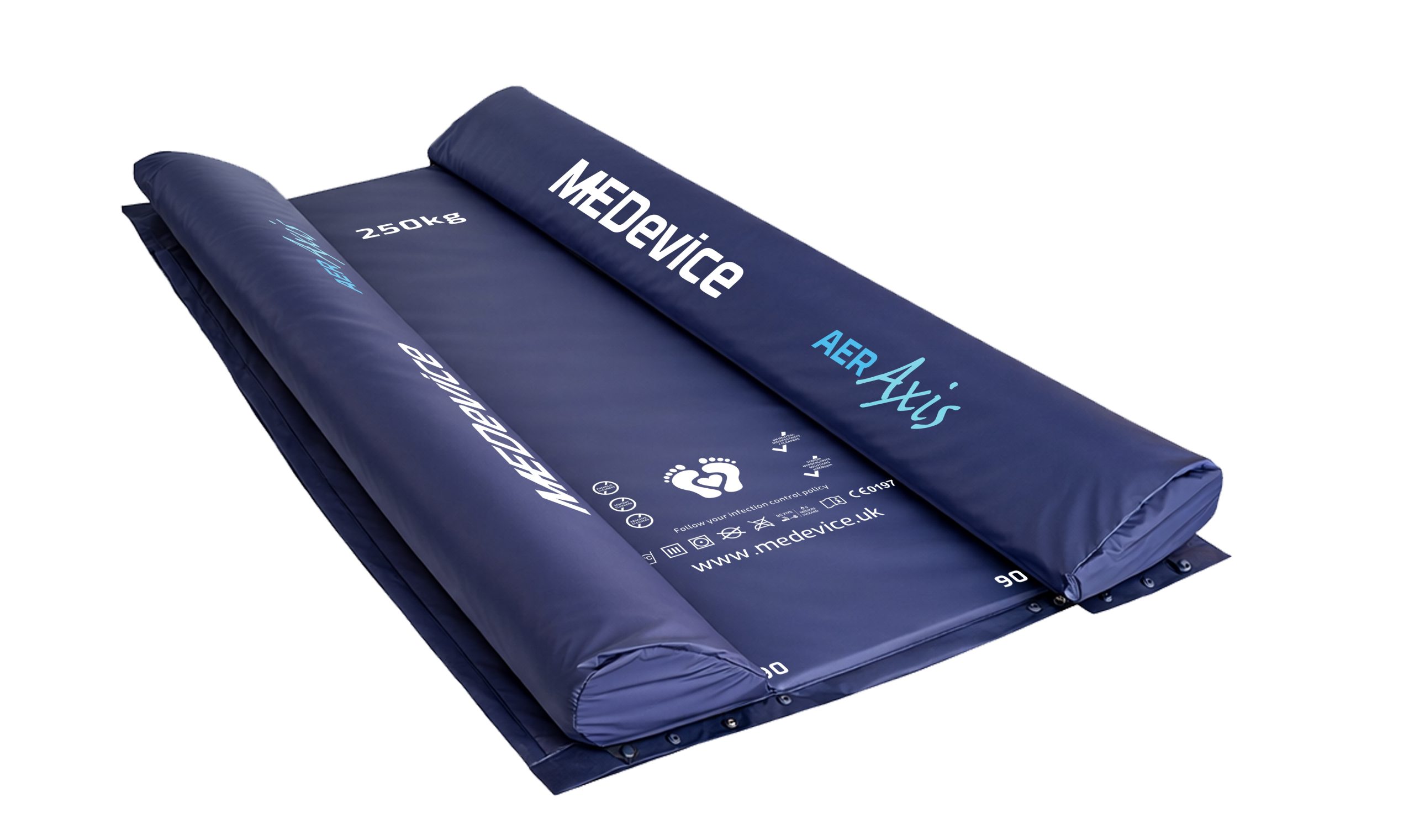
Repositioning is one of the most effective ways to prevent pressure ulcers, but turning someone every two hours, day and night, is hard on patients and carers alike. The AER Axis does the turning for you.

It’s an automated lateral turning system that sits under the existing mattress and gently rotates the patient from side to side, giving continuous pressure relief for patients at every level of risk.
- A gentle 30° turn. One air cell lifts to 30° while the other inflates to 5° to cradle and support the patient.
- You choose the direction. Turn left, right, or both, alternating automatically.
- A cycle to suit the person. Set the turn time anywhere from 10 minutes to 4 hours.
- Fits without moving the patient. Roll it under the mattress, plug it in and it’s ready in minutes. Width adjusts to 90, 105 or 120 cm.
- Built for care settings. 250 kg safe working load, low-pressure and power-failure alarms, and a pull-tag CPR release.
Fewer manual turns means less disturbed sleep for the patient, less strain on staff, and pressure relief that never misses a slot.
The stages of a pressure ulcer
Pressure ulcers are graded by how deep the damage goes. The earlier they are caught, the easier they are to treat.
| Stage | What you’ll see |
|---|---|
| Stage 1 | Discoloured skin that isn’t broken, often red and not fading when pressed |
| Stage 2 | Partial loss of skin, or a blister |
| Stage 3 | Full loss of skin, with damage to the tissue underneath |
| Stage 4 | Deep damage, with muscle, tendon or bone exposed |
| Unstageable or deep tissue injury | Damage that can’t be fully seen yet, or that is deeper than the surface suggests |
A simple rule for carers
Red, hot, hard or painful? Take the pressure off and investigate.
Reposition the person, keep checking the area, and speak to a nurse or GP if it doesn’t improve. Acting early is the best way to stop a pressure ulcer getting worse.
How MEDevice can help
MEDevice designs and manufactures pressure-relieving equipment for hospitals, care homes and care at home, and supplies hospitals and distributors across the UK and Europe. Our range covers every stage of risk:
- Alternating air mattresses: the AER range, including AER Auto, AER Reva and bariatric options
- Hybrid mattresses: AER Nexus and AER Fusion
- Lateral turning: the AER Axis
- Static mattresses: for lower-risk patients
- Pressure cushions: Luna, Halo and Nova
Not sure what’s right? Our team will talk it through with you and can arrange a trial, so you can see how the equipment works for your patient before you commit.
Or email info@medevice.uk.
Want more?
Check out our recent LinkedIn posts for more pressure ulcer content, including the early warning signs and what causes them.
This guide is general information and doesn’t replace advice from a healthcare professional. If you’re worried about someone’s skin, speak to their nurse, GP or care team.